
Indian Sandstone Subcollections


Autumn Brown Indian Sandstone Paving Patio Packs 22mm Cal. From £20.59/m2


Autumn Blend Indian Sandstone Paving 560 Series 5 Sizes 22mm Cal. From £19.89/m2


Autumn Blend Indian Sandstone Paving 3 Sizes 22mm Cal. From £18.50/m2
Indian sandstone paving patio packs are a traditional and practical choice for UK garden patios, paths and outdoor seating areas. Supplied in mixed slab sizes, these packs help create the classic random-pattern layout long associated with natural sandstone paving in British gardens.
Patio packs are often chosen where customers want a softer, more established appearance than a single-size layout. The mix of slab sizes gives the paved area natural movement and visual balance, making it suitable for cottage gardens, period properties, family patios and landscaped outdoor spaces.
Traditional Mixed-Size Sandstone Patio Packs
Indian sandstone patio packs are designed around the familiar mixed-size laying style used across many UK patios. Instead of repeating one slab size throughout the whole area, the varied formats create a more natural and less formal surface while still allowing a structured patio layout.
This makes patio packs especially suitable for customers who prefer a traditional sandstone appearance. The layout works well beside brickwork, lawns, planted borders, timber fencing and older property styles where a softer natural stone finish is preferred.
A Practical Alternative to Single-Size Slabs
Single-size sandstone slabs are often used for cleaner, more modern layouts, while mixed-size patio packs are better suited to a classic garden style. The variation in slab sizes helps break up long straight lines and gives the finished patio a more established look.
For many homeowners and landscapers, patio packs remain one of the most familiar ways to lay Indian sandstone. They provide a balanced appearance across compact patios, larger seating areas and informal garden paths without making the design feel too uniform.
Direct Importer Supply and Cost-Efficient Value
Paving Slabs Direct supplies Indian sandstone patio packs through a direct importer and integrated supply approach, helping customers access popular natural stone paving at cost-efficient prices. For mixed-size packs, reliable sourcing and practical stock availability are important because customers often need compatible slabs across the full patio area.
This collection is suitable for homeowners, landscapers and trade customers looking for a traditional sandstone patio format with broad UK appeal. It provides a straightforward route to genuine Indian sandstone paving in mixed-size packs for practical garden landscaping projects.
Indian Sandstone Patio Pack Laying Patterns and Installation Guide
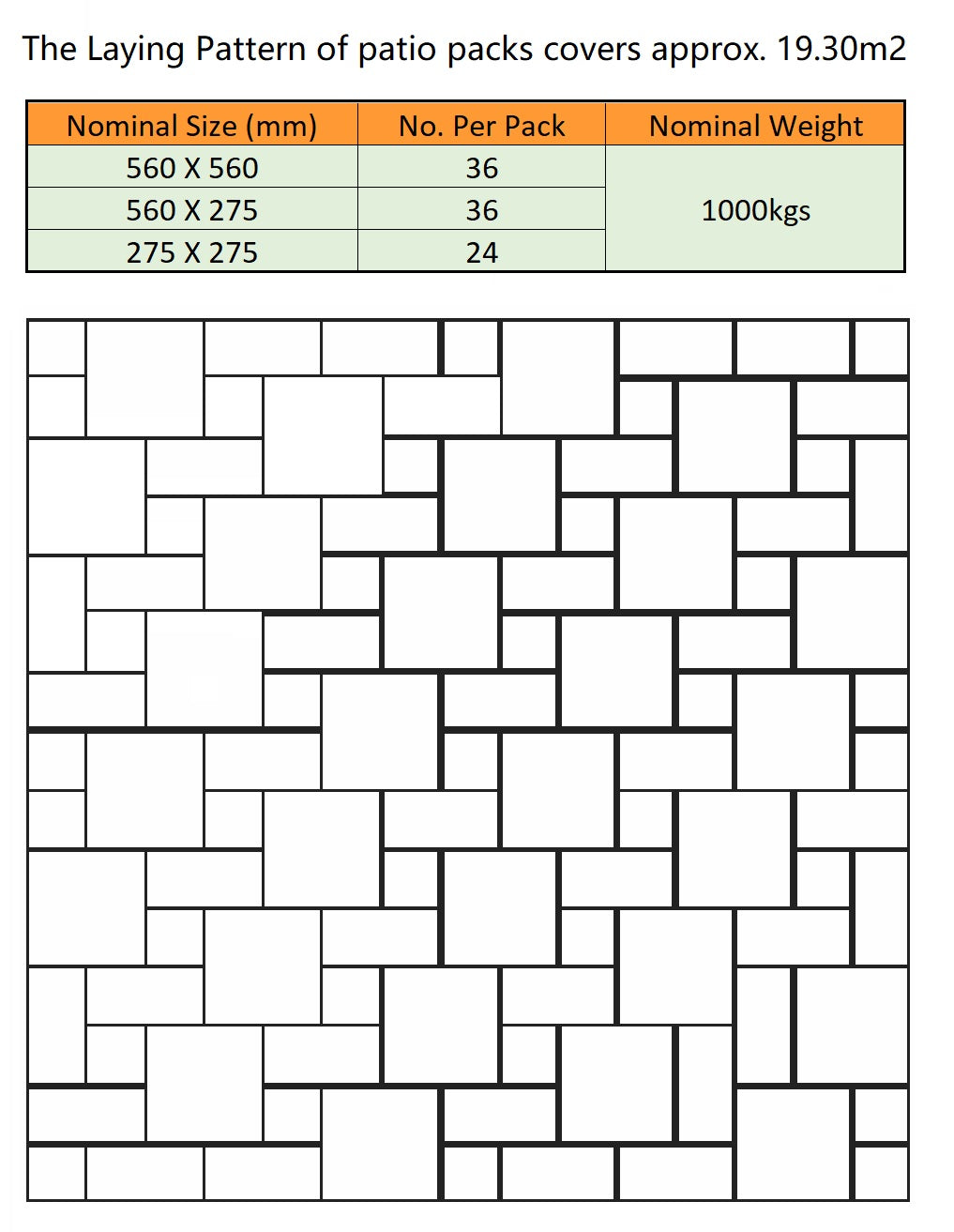
For customers planning a mixed-size sandstone patio, our laying guidance page provides practical support for installation planning, including laying pattern guidance and related paving installation information. Free laying pattern guides are also available for Indian sandstone patio packs supplied in 3, 4 and 5 sizes.
Indian Sandstone Paving - Frequently Asked Questions
How Long Does Indian Sandstone Paving Last?
Indian sandstone paving can last for decades when installed correctly on a properly prepared sub-base. For normal residential patios, garden paths and seating areas, a well-laid sandstone patio can often last 30 to 50 years or more.
The long-term performance depends on the quality of the stone, the laying method, drainage, jointing and general maintenance. A full mortar bed and solid MOT Type 1 sub-base are important for reducing movement and keeping the paving stable over time.
Like all natural stone, Indian sandstone will gradually weather and mature, but this is part of its character rather than a defect.
Is Indian Sandstone Suitable for the UK Climate?
Yes, Indian sandstone is well suited to the UK climate and has been widely used for British patios, garden paths and outdoor landscaping projects for many years.
It performs well in rain, frost, seasonal temperature changes and normal garden conditions, provided it is installed with suitable drainage and a proper fall to prevent standing water.
For the best result, the paving should be laid by a competent installer using an appropriate sub-base, mortar bed and jointing system.
Does Indian Sandstone Need to Be Sealed?
Sealing Indian sandstone is optional. Many customers leave the stone unsealed because they prefer the natural weathering process and the softer appearance that develops over time.
A suitable breathable stone sealer can help reduce staining from leaves, soil, food, drinks, oil and general garden use, especially on lighter colours such as Kandla Grey, Mint and Buff tones.
If a sealer is used, it should be suitable for natural sandstone and applied according to the manufacturer’s instructions. The slabs should normally be clean and dry before sealing.
Is Indian Sandstone Slippery When Wet?
Indian sandstone usually has a natural riven surface, which gives the paving texture and grip. This makes it a practical choice for outdoor patios, paths and garden seating areas.
As with any outdoor paving, the surface can become more slippery if algae, moss, mud or wet leaves are allowed to build up, especially in shaded or damp areas.
Regular sweeping and occasional cleaning will help maintain good surface grip and keep the paving safer in wet conditions.
How Do You Maintain Indian Sandstone Paving?
Indian sandstone is relatively easy to maintain. Regular sweeping, removal of leaves and occasional washing with clean water are usually enough for everyday garden use.
For deeper cleaning, use a mild patio cleaner suitable for natural stone. Strong acid-based cleaners should be avoided, as they may damage the sandstone surface or affect the colour of the paving.
Good drainage, clean joints and simple seasonal maintenance will help the patio stay in better condition for many years.
Can Indian Sandstone Be Used for Driveways?
Standard Indian sandstone patio slabs are generally designed for pedestrian use, including patios, paths, terraces and garden seating areas.
For driveways or vehicle areas, thicker stone, sandstone setts or products specifically suitable for vehicle loading should be used. The sub-base and installation method must also be designed for the weight and movement of cars.
If the project involves regular vehicle traffic, it is important to choose the correct product and take professional installation advice before ordering.
Will Indian Sandstone Change Colour Over Time?
Yes, Indian sandstone is a natural material and its colour will gradually soften and mature with exposure to sunlight, rain and general outdoor conditions.
This natural weathering is one of the main reasons many customers choose sandstone. It gives the patio a more authentic and established garden appearance compared with many artificial paving products.
Colour variation between slabs is also normal, especially with natural stone paving. This variation helps create a traditional and natural-looking patio finish.
What Base Should Be Used for Indian Sandstone?
For most patios and garden paths, Indian sandstone should be laid on a properly compacted MOT Type 1 sub-base. This provides the strength and stability needed to support the paving.
The slabs should normally be laid on a full mortar bed rather than spot bedding. A full bed gives better support and reduces the risk of voids, rocking slabs or cracking over time.
A suitable primer or slurry bond bridge is also commonly used by professional installers to improve adhesion between the natural stone slab and the mortar bed.
Is Indian Sandstone a Good Choice for Traditional UK Gardens?
Yes, Indian sandstone is one of the most established choices for traditional UK garden patios. Its natural riven surface, colour variation and hand-dressed edges work well with brick houses, lawns, planting areas and classic garden layouts.
Popular colours such as Kandla Grey, Raj Green, Autumn Brown and Mint are often used to create warm, natural and timeless outdoor spaces.
For homeowners who prefer a natural garden character rather than a very uniform modern surface, Indian sandstone remains one of the most reliable paving choices.




- Choosing a selection results in a full page refresh.