
Indian Sandstone Subcollections


Raj Blend Indian Sandstone Paving Patio Packs 560 Series 3 Sizes 22mm Cal. From £19.59/m2


Autumn Blend Indian Sandstone Paving 3 Sizes 22mm Cal. From £18.50/m2
Indian sandstone patio packs in the 3-size mixed format are a practical sedimentary stone solution designed for high-efficiency outdoor groundworks. This collection features a specific combination of three slab sizes—560 x 560, 560 x 275, and 275 x 275mm—providing a visually balanced and stable surface for garden patios, terraces, and pathways. Historically valued in the UK market for its frost resistance and natural riven texture, this sandstone configuration allows for the creation of traditional random patterns that settle comfortably into any garden landscape.
The technical advantage of the 3-size (560 series) patio pack lies in its superior production efficiency and on-site usability. By utilizing slabs produced alongside standard 600 x 600 sandstone slabs, this format improves quarry yield and minimizes material loss at the source. All slabs are fully calibrated to a consistent 22mm thickness, ensuring rapid mortar bedding and predictable finished levels. This pre-defined mix is particularly effective for small to medium-sized garden patios, where controlled material usage and reduced on-site cutting are essential for project efficiency.
As the 560 series is engineered for maximum material utilization, Paving Stone Direct (PSD) leverages this through a direct importer, trade-oriented supply model. By sourcing Indian sandstone paving directly from partner quarries, we ensure that the cost savings from improved quarry yields are passed directly to the UK market. This importer-led structure removes unnecessary distribution mark-ups and ensures tighter control over batch consistency and grading, providing one of the most cost-efficient natural stone paving options currently available for trade and domestic use.
From a project execution perspective, 3-size patio packs offer a dependable balance of traditional appearance and modern value. The varying slab sizes introduce natural movement and visual depth to the surface, avoiding the rigid look of single-size paving. For contractors, the layout logic built into the pack supports efficient installation while maintaining clean joint alignment across the paved area. When installed on a correctly prepared sub-base, this 560-series sandstone provides a durable, weather-resistant surface that matures naturally within the UK climate, maintaining its structural integrity over long-term use.
PSD is committed to supporting trade customers and landscaping professionals with consistent repeat supply and reliable delivery planning across our 3-size sandstone ranges. By focusing on volume procurement and importer-direct logistics, we provide a streamlined sourcing solution that enables the delivery of high-quality, durable garden surfaces at a competitive price point. This approach ensures that every project is supported by consistent material grading and practical technical guidance, allowing professionals to deliver established-looking landscapes within budget.
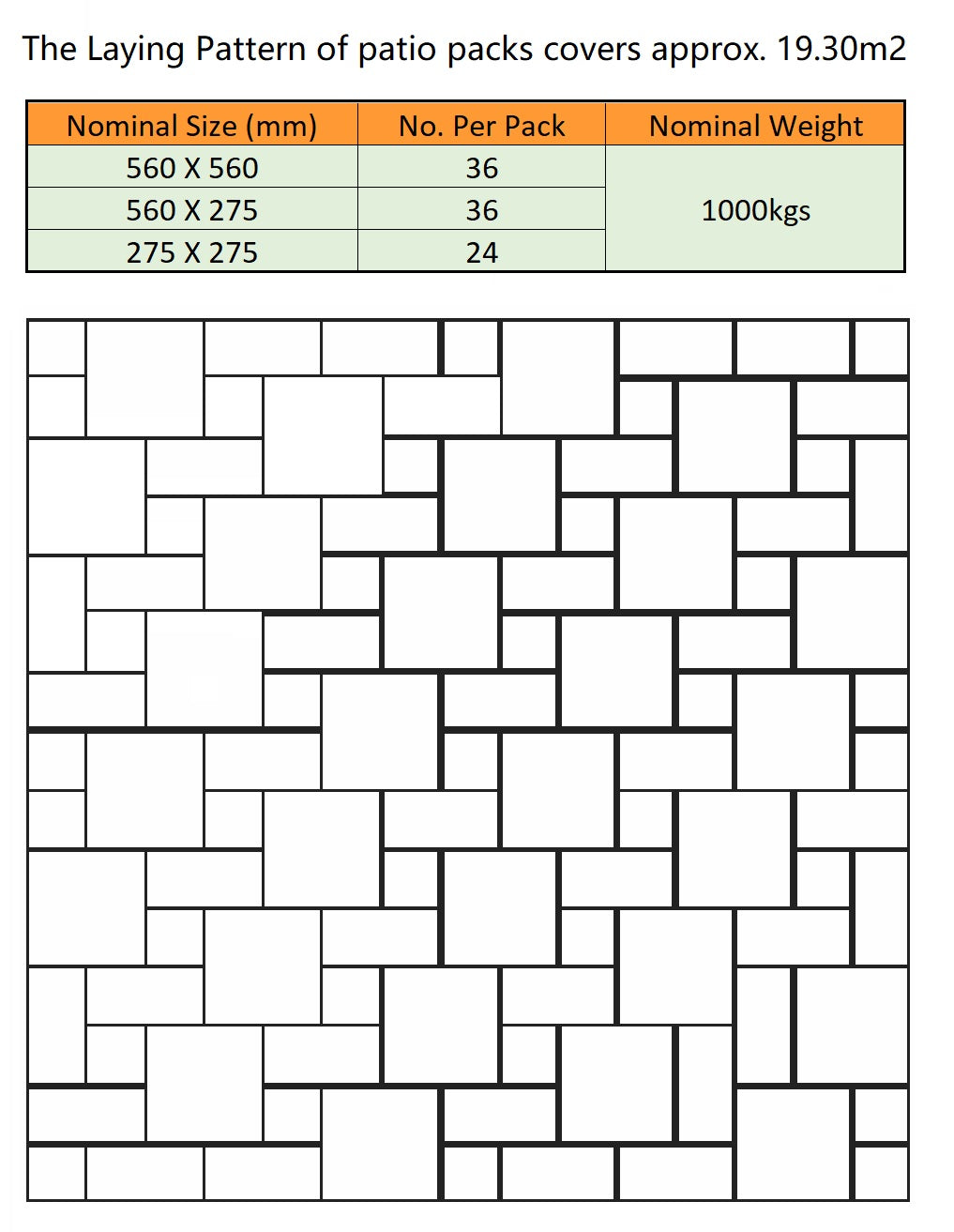
Technical Resource: For optimal results, we recommend following our industry-standard layout. Download the Indian Sandstone Patio Pack Laying Pattern – 3 Sizes. As with all natural stone, variations in tone and texture are inherent characteristics and should be distributed evenly across the patio during installation.
Indian Sandstone Paving - Frequently Asked Questions
How Long Does Indian Sandstone Paving Last?
Indian sandstone paving can last for decades when installed correctly on a properly prepared sub-base. For normal residential patios, garden paths and seating areas, a well-laid sandstone patio can often last 30 to 50 years or more.
The long-term performance depends on the quality of the stone, the laying method, drainage, jointing and general maintenance. A full mortar bed and solid MOT Type 1 sub-base are important for reducing movement and keeping the paving stable over time.
Like all natural stone, Indian sandstone will gradually weather and mature, but this is part of its character rather than a defect.
Is Indian Sandstone Suitable for the UK Climate?
Yes, Indian sandstone is well suited to the UK climate and has been widely used for British patios, garden paths and outdoor landscaping projects for many years.
It performs well in rain, frost, seasonal temperature changes and normal garden conditions, provided it is installed with suitable drainage and a proper fall to prevent standing water.
For the best result, the paving should be laid by a competent installer using an appropriate sub-base, mortar bed and jointing system.
Does Indian Sandstone Need to Be Sealed?
Sealing Indian sandstone is optional. Many customers leave the stone unsealed because they prefer the natural weathering process and the softer appearance that develops over time.
A suitable breathable stone sealer can help reduce staining from leaves, soil, food, drinks, oil and general garden use, especially on lighter colours such as Kandla Grey, Mint and Buff tones.
If a sealer is used, it should be suitable for natural sandstone and applied according to the manufacturer’s instructions. The slabs should normally be clean and dry before sealing.
Is Indian Sandstone Slippery When Wet?
Indian sandstone usually has a natural riven surface, which gives the paving texture and grip. This makes it a practical choice for outdoor patios, paths and garden seating areas.
As with any outdoor paving, the surface can become more slippery if algae, moss, mud or wet leaves are allowed to build up, especially in shaded or damp areas.
Regular sweeping and occasional cleaning will help maintain good surface grip and keep the paving safer in wet conditions.
How Do You Maintain Indian Sandstone Paving?
Indian sandstone is relatively easy to maintain. Regular sweeping, removal of leaves and occasional washing with clean water are usually enough for everyday garden use.
For deeper cleaning, use a mild patio cleaner suitable for natural stone. Strong acid-based cleaners should be avoided, as they may damage the sandstone surface or affect the colour of the paving.
Good drainage, clean joints and simple seasonal maintenance will help the patio stay in better condition for many years.
Can Indian Sandstone Be Used for Driveways?
Standard Indian sandstone patio slabs are generally designed for pedestrian use, including patios, paths, terraces and garden seating areas.
For driveways or vehicle areas, thicker stone, sandstone setts or products specifically suitable for vehicle loading should be used. The sub-base and installation method must also be designed for the weight and movement of cars.
If the project involves regular vehicle traffic, it is important to choose the correct product and take professional installation advice before ordering.
Will Indian Sandstone Change Colour Over Time?
Yes, Indian sandstone is a natural material and its colour will gradually soften and mature with exposure to sunlight, rain and general outdoor conditions.
This natural weathering is one of the main reasons many customers choose sandstone. It gives the patio a more authentic and established garden appearance compared with many artificial paving products.
Colour variation between slabs is also normal, especially with natural stone paving. This variation helps create a traditional and natural-looking patio finish.
What Base Should Be Used for Indian Sandstone?
For most patios and garden paths, Indian sandstone should be laid on a properly compacted MOT Type 1 sub-base. This provides the strength and stability needed to support the paving.
The slabs should normally be laid on a full mortar bed rather than spot bedding. A full bed gives better support and reduces the risk of voids, rocking slabs or cracking over time.
A suitable primer or slurry bond bridge is also commonly used by professional installers to improve adhesion between the natural stone slab and the mortar bed.
Is Indian Sandstone a Good Choice for Traditional UK Gardens?
Yes, Indian sandstone is one of the most established choices for traditional UK garden patios. Its natural riven surface, colour variation and hand-dressed edges work well with brick houses, lawns, planting areas and classic garden layouts.
Popular colours such as Kandla Grey, Raj Green, Autumn Brown and Mint are often used to create warm, natural and timeless outdoor spaces.
For homeowners who prefer a natural garden character rather than a very uniform modern surface, Indian sandstone remains one of the most reliable paving choices.


- Choosing a selection results in a full page refresh.